

Campaigns
A campaign has an expert call everyone on a list, inside your hours in each person’s own time zone. It tries again when nobody answers and honours “stop calling me”. Campaigns call US numbers from one of your phone numbers. Everyone can see Campaigns; only admins and the owner can run one.
Rydhm’s calling hours, consent attestation, opt-out detection and do-not-call list help you follow US calling rules. They are not legal advice and don’t make a campaign lawful on their own. Read What you are responsible for and check your plans with your counsel.
Create a campaign
Who calls
Go to Campaigns and select New campaign. Pick the Expert, the number it Calls from (an Active number that people can call back) and a Name. The draft is saved from here on, so you can leave and come back.
People
Drop in your CSV and match its columns. Select Check the list to see what will be imported and which rows have problems, then Add the people.
A campaign with a future start date is Scheduled. Otherwise it starts Calling people whose local time is inside your hours.
The CSV file
One person per row, with a header row. Up to 5,000 people per campaign (about 2 MB) and 50 columns.
Rydhm guesses the mapping from your headers, and you can change it. Each extra column becomes a variable named after its header (Plan tier becomes {{plan_tier}}) that you can use, with {{first_name}} and {{company}}, in the expert’s instructions.
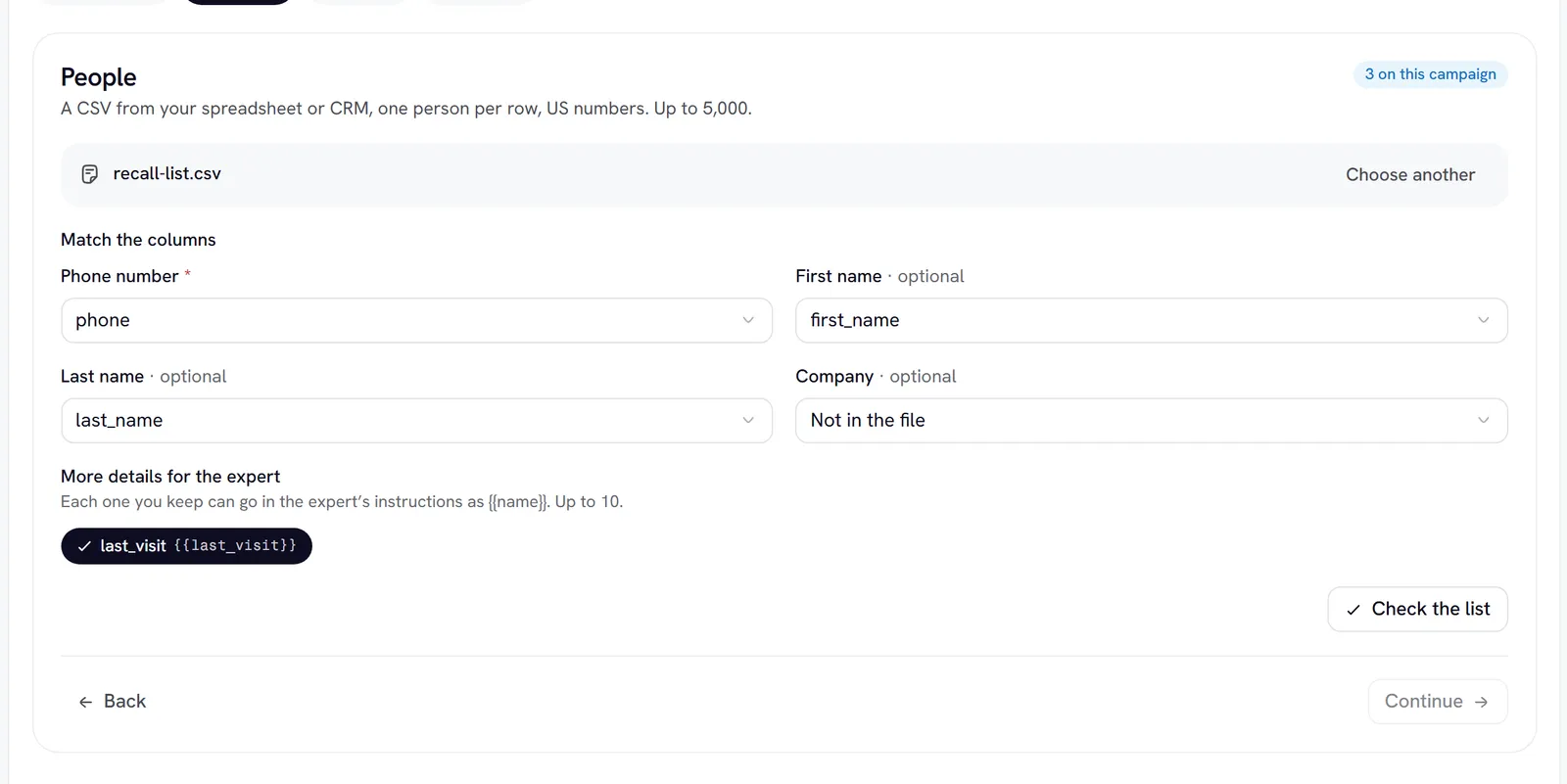
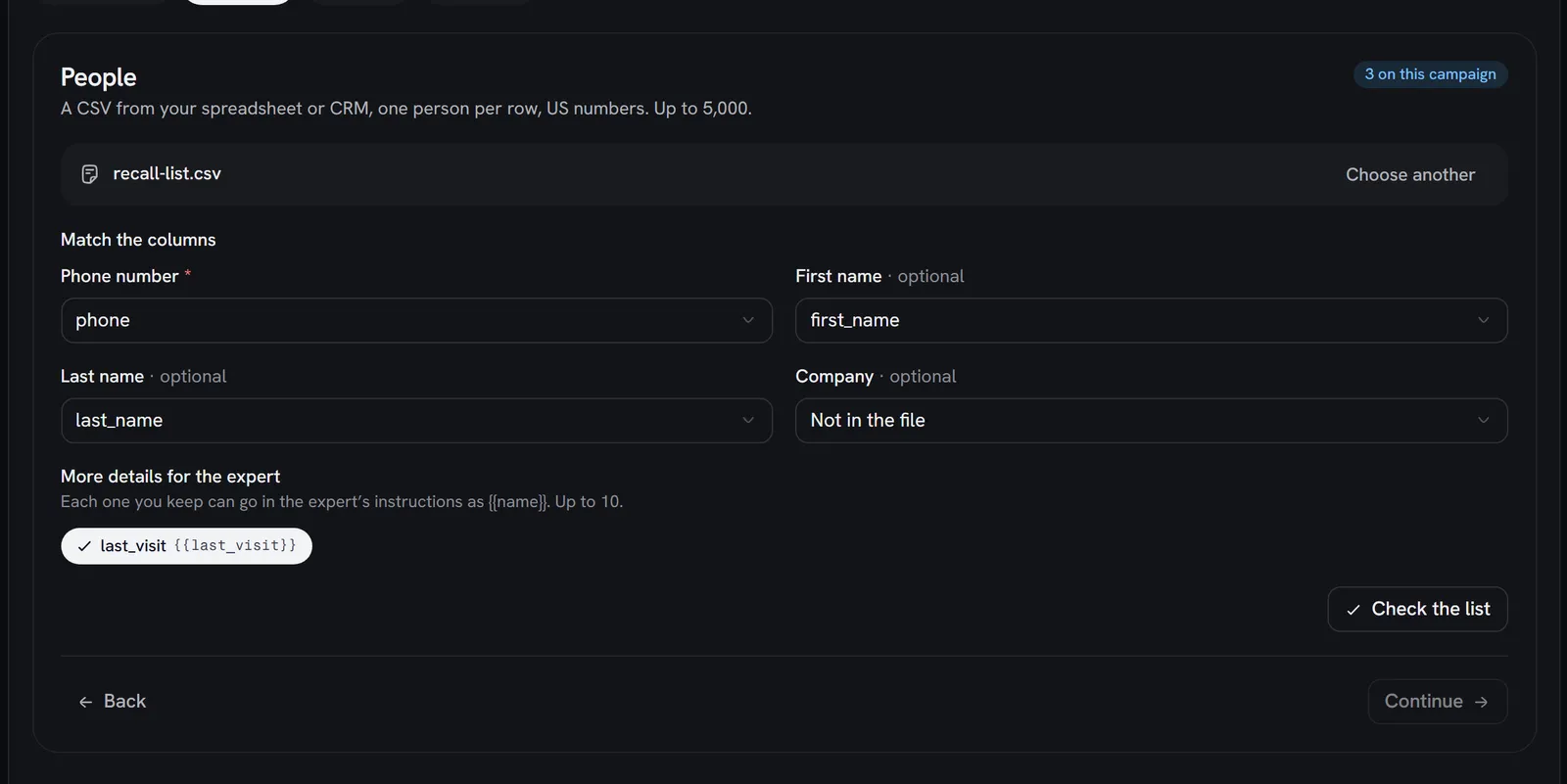
Missing, invalid, non-US, undialable and duplicate numbers are rejected, with their row numbers. Numbers on your do-not-call list are imported as Skipped and never called.
Calling hours
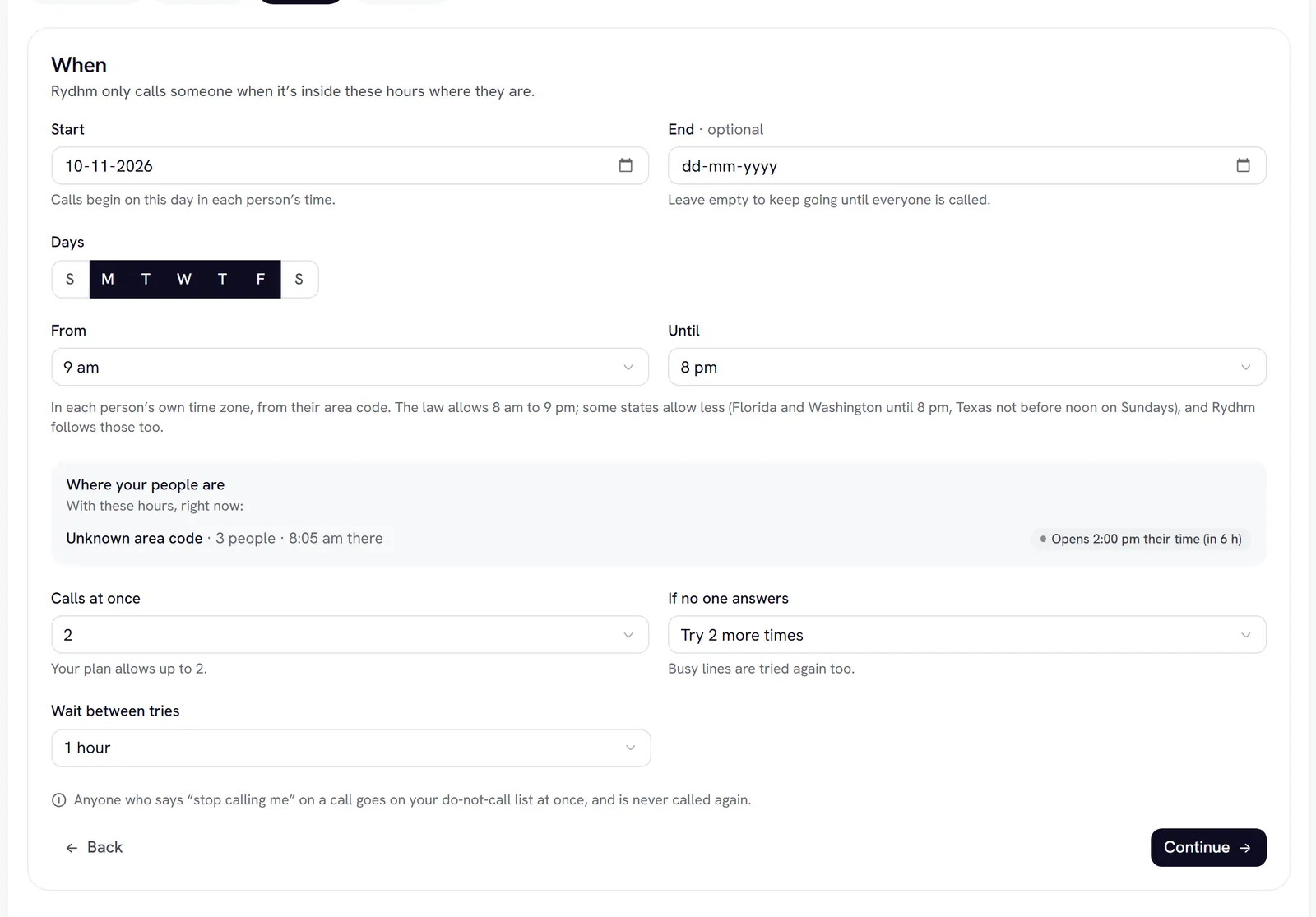
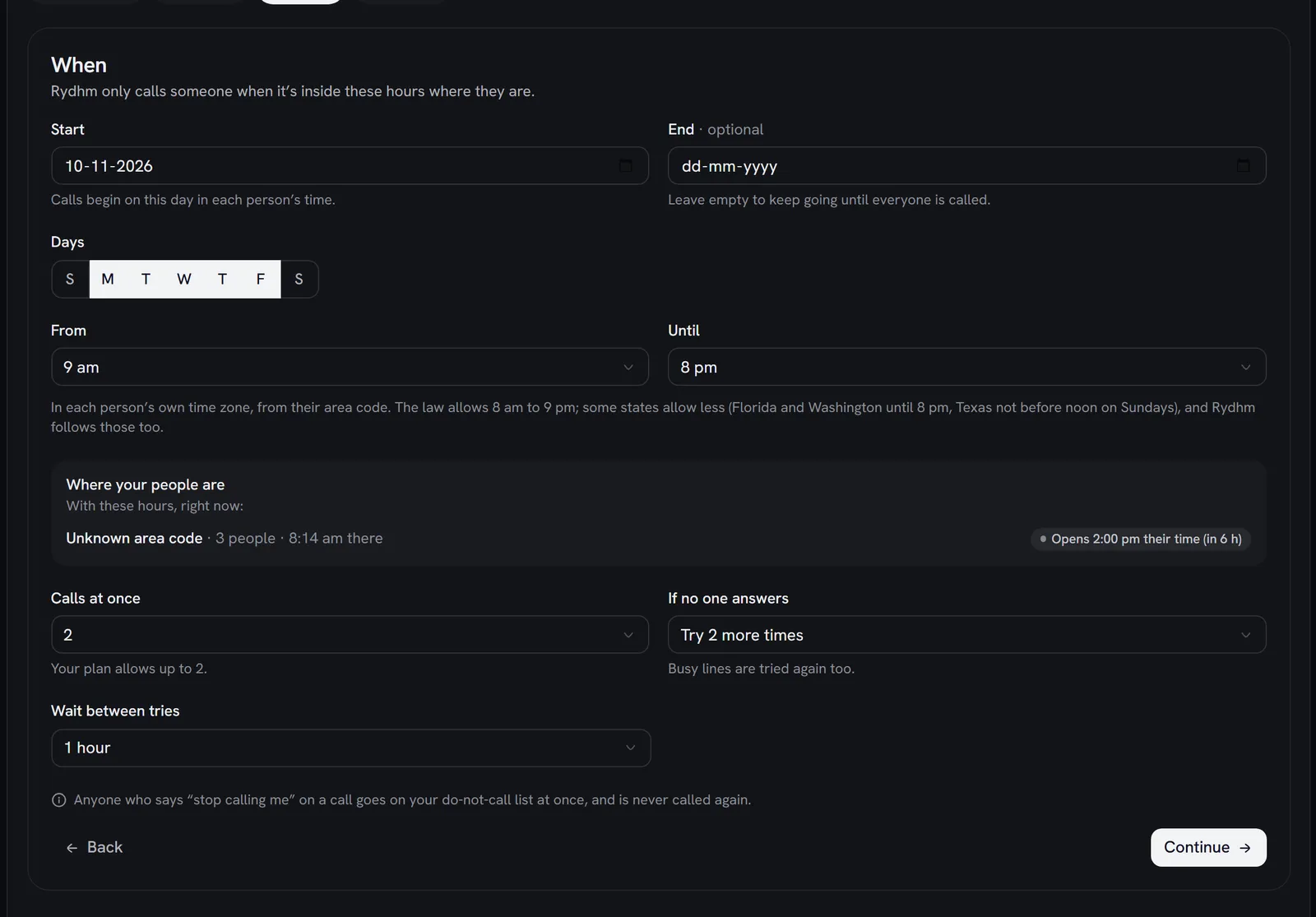
Rydhm works out each person’s time zone from their area code and calls only inside your hours there. The federal limit is 8 am to 9 pm local time, and you can’t pick hours outside it. The default is weekdays, 9 am to 8 pm.
Where a state allows less, Rydhm applies the stricter hours:
An area code that spans time zones is called only when every zone is inside the hours; one Rydhm can’t place is held to all US zones. No call starts in the last 5 minutes of the window, and each number gets at most 3 campaign calls in 24 hours across your campaigns.
The consent attestation
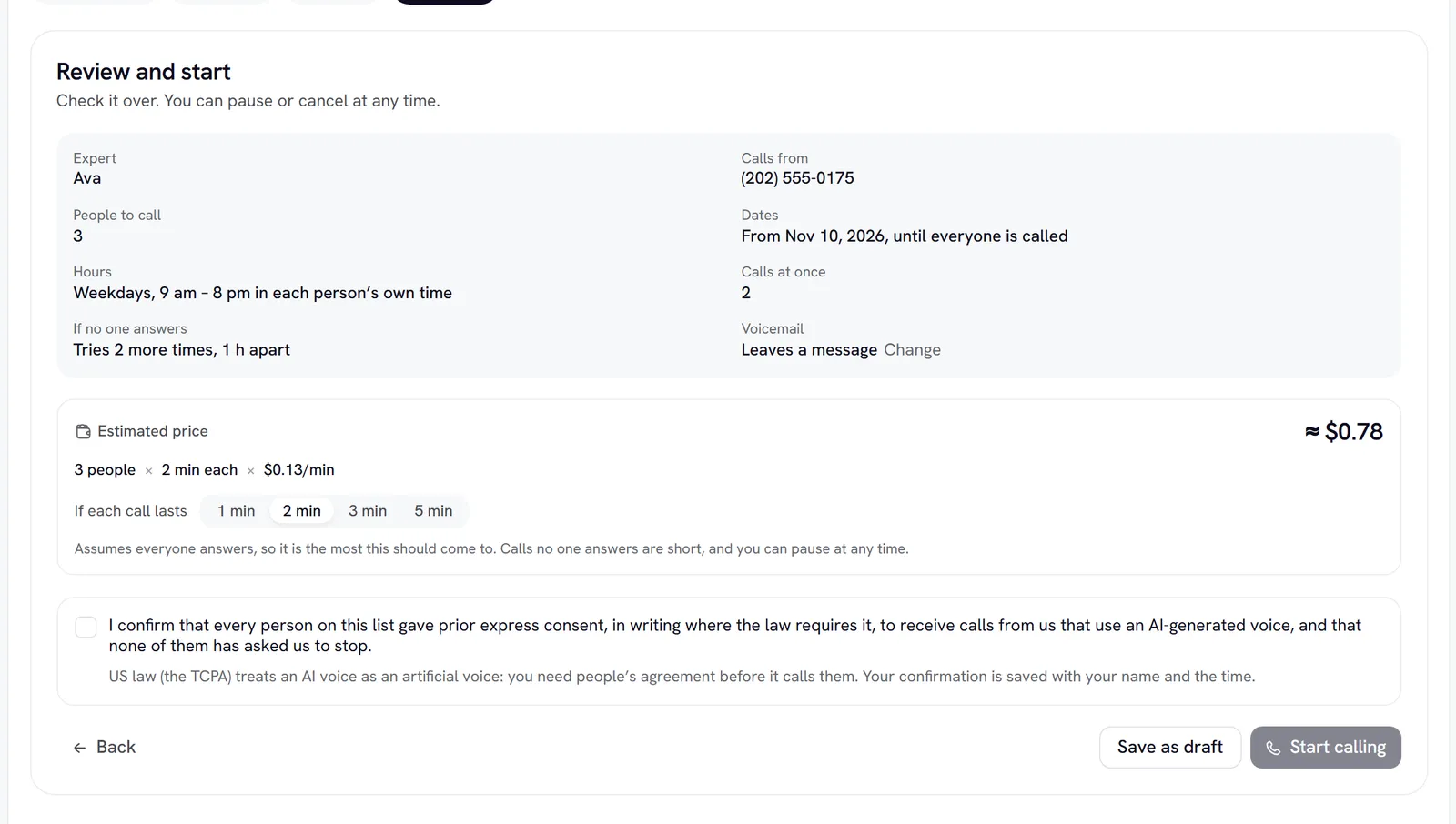
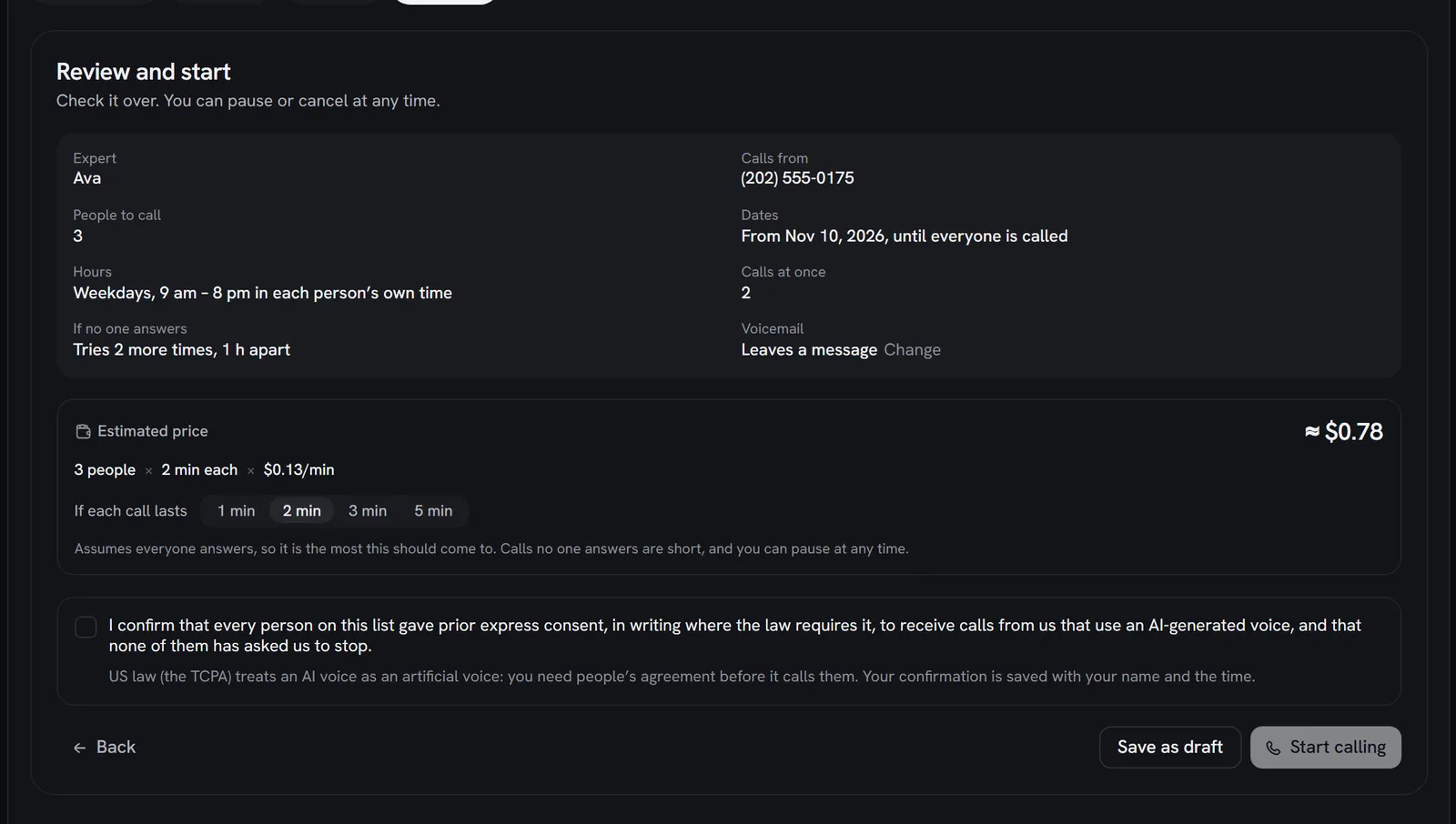
An admin must tick this statement before a campaign can call anyone:
I confirm that every person on this list gave prior express consent, in writing where the law requires it, to receive calls from us that use an AI-generated voice, and that none of them has asked us to stop.
US law (the TCPA) treats an AI voice as an artificial voice. Rydhm saves the statement with the admin’s name and the time.
Retries
Each person gets up to 3 calls: the first, plus up to 2 more, 1 hour, 2 hours, 4 hours or a day apart. Rydhm tries again after no answer, a busy line or a broken line. Voicemail counts as Reached if the expert leaves a message. If the expert’s voicemail setting is to hang up, the person is tried again.
The do-not-call list
Settings → Do not call lists numbers no expert in your workspace will ever call, in a campaign or as a one-off call. Everyone can see it; admins change it.
- Add numbers: paste numbers, or select Or choose a CSV file. Up to 5,000 at a time, with an optional Reason.
- Asked on a call: after each answered campaign call, Rydhm reads the person’s words. If they asked to stop (“stop calling me”, “take my number off”, “unsubscribe” and similar, in English or Hindi), the number goes on the list right after the call and the person shows as Asked not to be called. These entries can’t be removed.
Pause, cancel and hang up
Pause stops new calls while calls in progress finish; Resume starts again. Hang up, under On the phone now, ends a live call. Change hours and Cancel are in the More actions menu; a canceled campaign can’t be restarted.
A campaign pauses itself and says why when it can’t go on, for example when credits run out or 10 calls in a row didn’t connect. Fix the cause and select Resume.
Results
The campaign page shows Done, Reached, Talk time, Cost, and outcomes from post-call analysis. The People table links each transcript, and Export results (CSV) downloads them all. Calls are charged as phone minutes.
What you are responsible for
You remain responsible for:
- Having consent: prior express consent for AI-voice calls, and prior express written consent for telemarketing. Rydhm records your attestation but can’t check it.
- The National Do Not Call Registry: Rydhm doesn’t scrub against it.
- Opt-outs made elsewhere, such as by email or text. Add them to Do not call yourself.
- State rules Rydhm doesn’t apply, such as holiday calling bans.
- Where people really are: an area code shows where a number was issued, not where its owner is now.
- What the call says, and any other law that applies to you.